
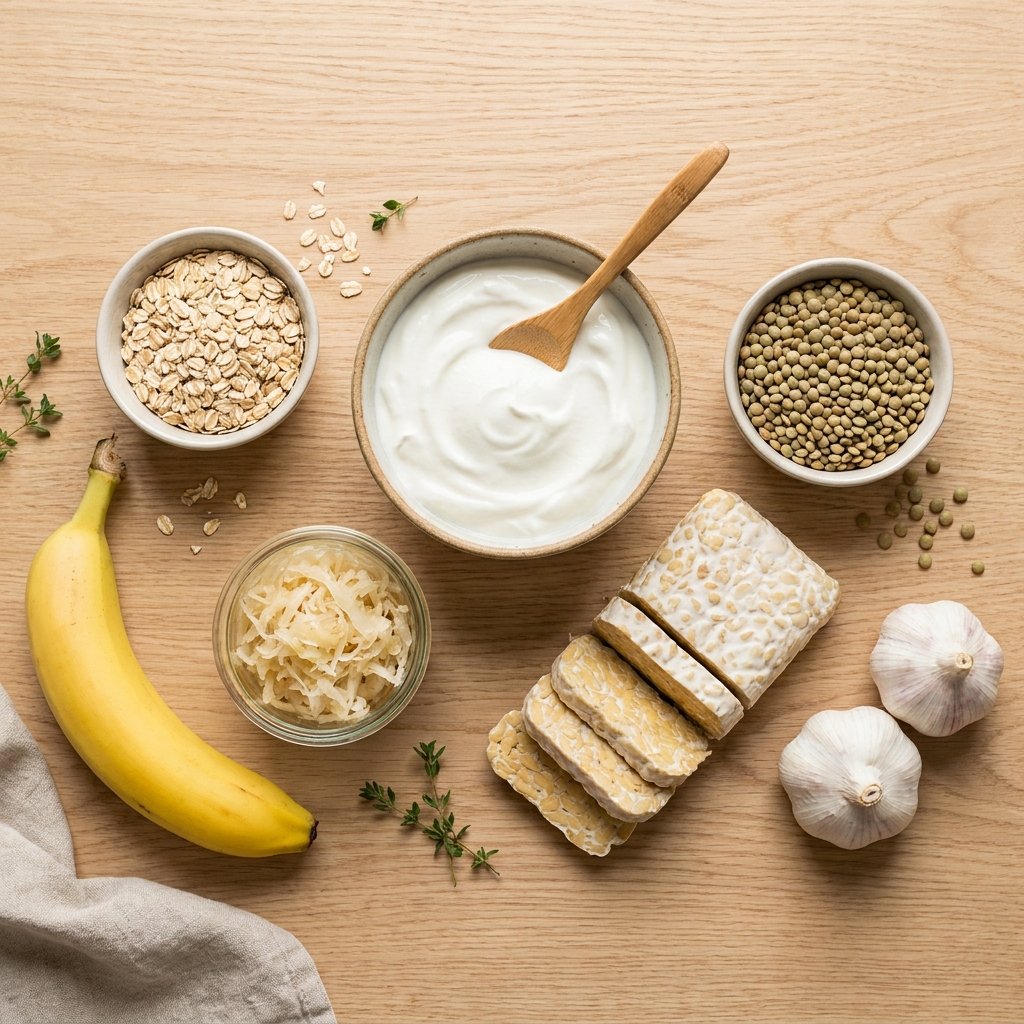
You don’t need an expensive supplement stack or a specialty grocery run to start supporting your gut health — several genuinely effective options are likely already familiar, or easy to find at a regular grocery store. Here are seven worth prioritizing.
1. Oats. A reliable source of soluble fiber, oats are easy to eat daily and provide fuel for beneficial gut bacteria without requiring any adjustment to your routine — a simple swap into an existing breakfast habit.
2. Bananas. A common, accessible source of prebiotic fiber (specifically resistant starch, particularly in slightly under-ripe bananas), bananas require no preparation and fit easily into an existing diet as a snack or breakfast addition.
3. Live-culture yogurt. Yogurt with active live cultures introduces beneficial bacteria directly, and it’s one of the most widely available and familiar fermented foods for people newer to gut-health-focused eating — no acquired taste required, unlike some other fermented foods.
4. Lentils. Beyond fiber, lentils provide resistant starch and plant protein, and they’re genuinely versatile — soups, salads, mixed into rice, blended into dips — making consistent inclusion realistic rather than a chore.
5. Garlic and onions. Both contain fructans, which selectively feed beneficial gut bacteria. They’re already common cooking staples for most people, meaning gut-health benefit here often requires no behavior change at all beyond continuing to cook the way you already do — though people with IBS may need to watch their tolerance.
6. Kimchi or sauerkraut (in small amounts). Fermented vegetables introduce live cultures and fermentation-derived compounds. Starting with a small spoonful alongside a familiar meal — rather than a large serving on its own — is an easier entry point for most beginners.
7. Tempeh. Made from fermented whole soybeans, tempeh offers plant protein and fiber; worth noting that cooking typically reduces or eliminates the live microbial content, so its main gut-health value comes from fiber and fermentation byproducts rather than live cultures specifically — still a nutritionally solid choice, just not for the same reason as raw fermented foods.
A simple way to build these in without overhauling your diet: pick two or three from this list that you already like or eat occasionally, and make them a more consistent, deliberate part of your week — rather than trying to add all seven at once. Gut microbiome changes can begin within a day or two of dietary shifts, but meaningful, lasting change comes from sustained, gradual habits, not a single big diet overhaul.
A caution worth repeating: more fiber and more fermented foods isn’t automatically better in unlimited quantities — introducing changes gradually, staying hydrated, and paying attention to your own digestive response matters more than hitting an aggressive target immediately.
This article is for general information only and is not medical advice. If you have digestive symptoms or a diagnosed condition, consult a doctor or registered dietitian before making significant dietary changes.

1 Comment
Pingback: Gut Health Foods For Beginners: Where To Actually Start | Gowithtrendy.com