
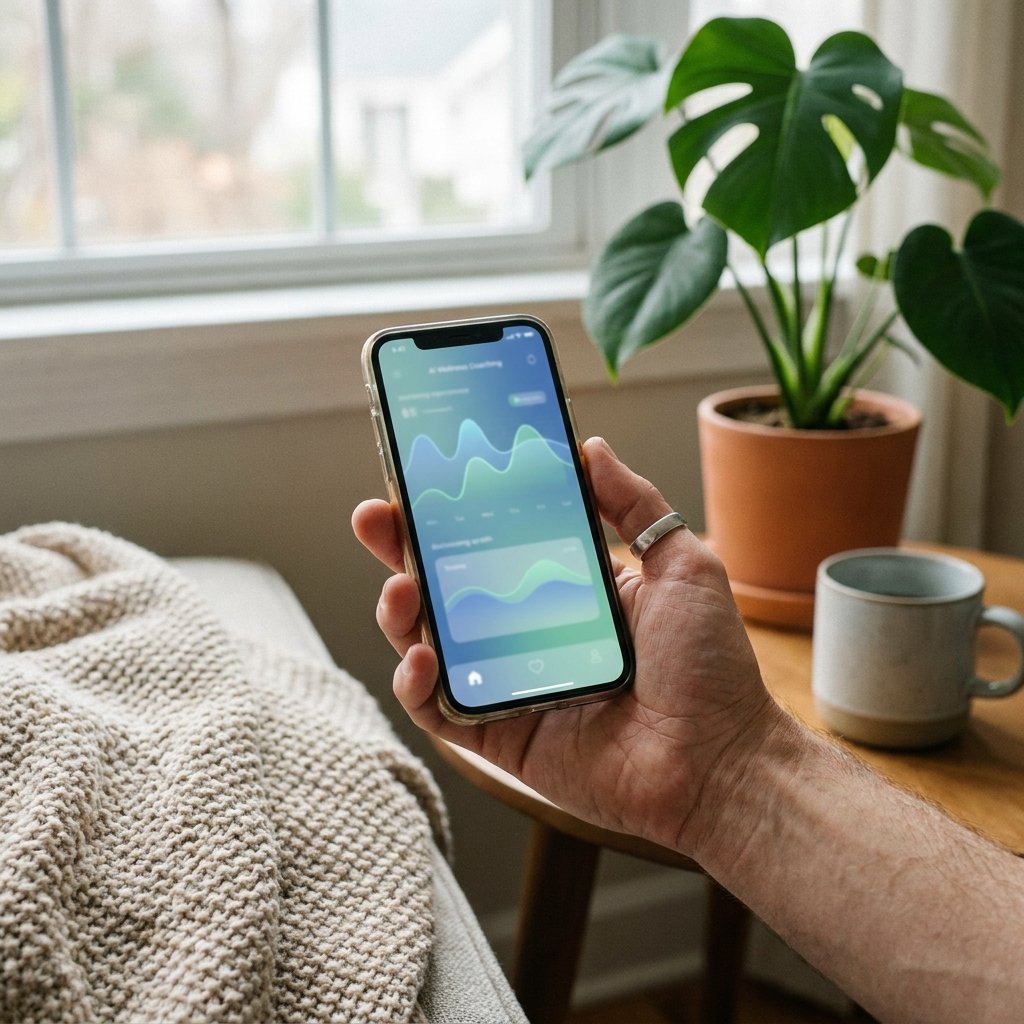
Nearly every wellness app now claims to be “AI-powered” — but the gap between genuine adaptive AI and a basic algorithm with an AI label slapped on is enormous. Here’s a look at apps that use AI in ways that actually change the experience, across mental wellness and physical coaching.
Wysa — most clinically validated mental health AI. Wysa combines AI-driven emotional support with optional access to real human therapists, and has reportedly helped several million users across dozens of countries. It has received the FDA’s Breakthrough Device Designation in the U.S. — a designation reserved for tools showing potential to meaningfully improve on existing treatment approaches. A peer-reviewed study of Wysa users found that access to AI support between coaching sessions made users notably more likely to complete their full coaching program.
Flourish — evidence-based, built by psychologists. Flourish integrates cognitive behavioral therapy (CBT) and acceptance and commitment therapy (ACT) techniques through an AI coach, and its effectiveness has reportedly been tested in randomized controlled trials with research institutions — a meaningfully higher evidence bar than most wellness apps clear. It’s also frequently recommended by therapists as a support tool between sessions, not a replacement for them.
Calm — AI personalization layered onto an established platform. Calm added smarter AI personalization that adjusts content based on usage patterns and mood history, making a familiar meditation/sleep app feel more like an adaptive coach than a static content library.
Fitbod — genuinely adaptive AI for strength training. Rather than a fixed workout plan, Fitbod tracks muscle fatigue across sessions and automatically adjusts training volume and intensity — reducing load on muscle groups still recovering and increasing it on fresh ones. Reviewers testing it over multiple weeks found the adaptive programming genuinely comparable to a mid-tier human personal trainer.
How to tell genuine AI coaching from a relabeled algorithm: ask whether the app’s recommendations actually change based on your specific patterns over time, or whether everyone gets essentially the same generic content regardless of their input. Genuine AI coaching should feel noticeably different a month in than it did on day one; static content with an AI label typically doesn’t.
A real limitation worth knowing: most AI coaching still relies heavily on self-reported feedback (how a workout “felt,” your mood rating), which is inherently subjective — the AI generally can’t distinguish between a hard workout on a bad night’s sleep versus a genuinely too-difficult session. This isn’t a dealbreaker, but it’s worth keeping in mind when trusting any AI-generated recommendation.
A sensible way to start: most of these apps offer a free tier or trial — testing for at least a full week (rather than a single session) is important, since many of these tools’ actual value only becomes apparent once they’ve had time to learn your patterns.
This article is for general information only and is not medical advice. AI wellness apps are wellness tools, not medical devices, and don’t diagnose conditions or replace professional care. If you’re experiencing persistent mental health symptoms, talk to a doctor or licensed therapist. If you are in crisis or having thoughts of self-harm, contact a crisis helpline or emergency services in your area immediately.
