
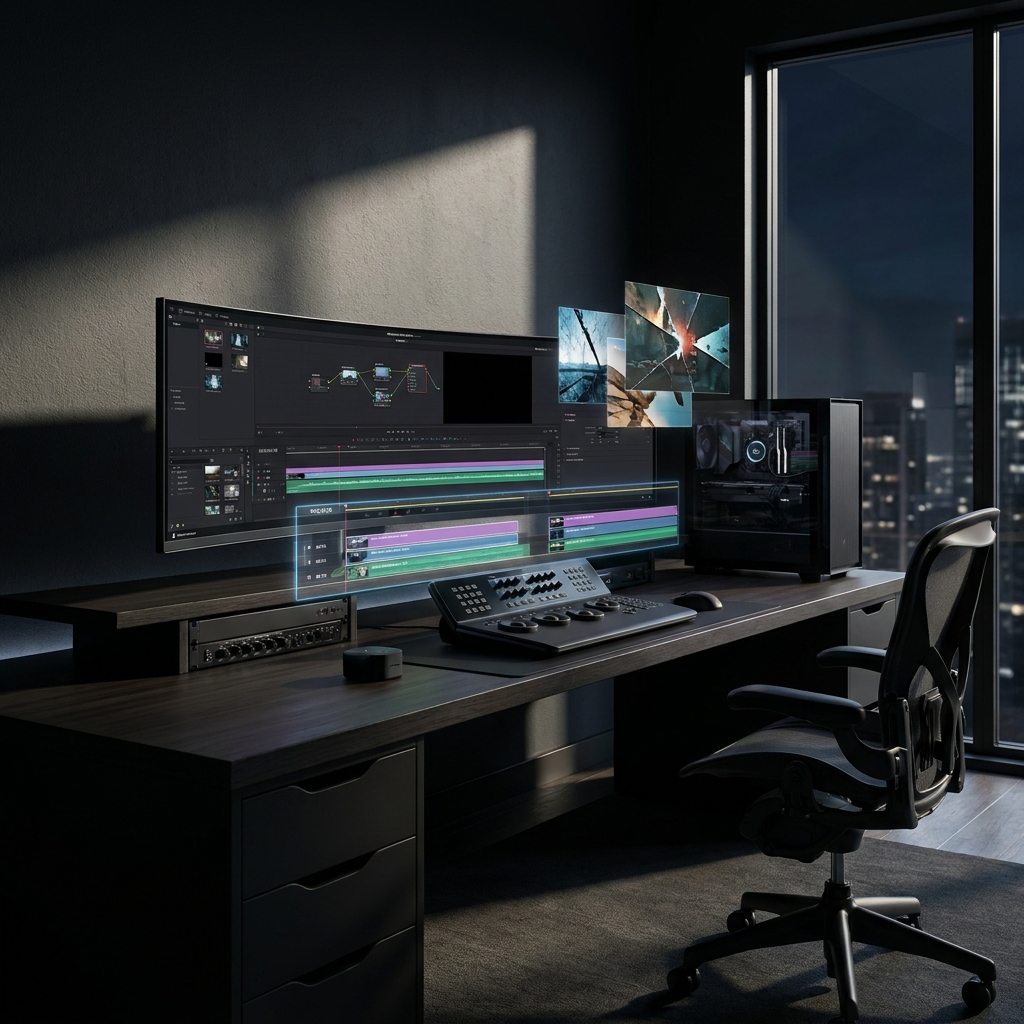
Video content dominates the modern digital landscape, but the tools used to create it have undergone a total revolution. As we navigate 2026, searching for the best AI video editor 2026 is no longer just about discovering software that trims clips faster—it is about leveraging intelligent creative partners. Artificial intelligence has evolved from simple automated cutting and basic transcriptions into sophisticated generative engines capable of turning raw concepts and text prompts into studio-quality video within minutes.
Whether you are a solo content creator, a digital marketing agency, or a professional filmmaker, AI-powered video editors have permanently redefined the post-production workflow. In this ultimate guide, we explore the breakthrough features of 2026, review the top-performing platforms, and help you select the ideal tool for your visual storytelling needs.
The Evolution of AI Video Editing in 2026
A few years ago, AI features in video editing were largely limited to automated closed captions, simple background removal, and elementary voice enhancement. In 2026, the technological baseline is exponentially more advanced. Today’s leading applications offer multimodal generative pipelines, real-time hyper-realistic voice clone synchronization, dynamic scene re-lighting, and intuitive prompt-based timeline editing.
Editors no longer spend countless hours color-matching disparate clips, tracking camera movements frame-by-frame, or hunting down stock B-roll. Instead, modern AI editors analyze script tone, suggest narrative cuts, automatically generate missing visual elements, and balance complex multi-track audio effortlessly. The barrier between idea and execution has never been thinner.
Key Features to Look for in the Best AI Video Editor 2026
When evaluating modern video creation platforms, several core capabilities set the industry leaders apart from basic editing suites:
- In-Context Generative Video: The ability to insert photorealistic or stylized visual elements directly into existing footage using simple natural language prompts.
- Automated Multi-Camera Switching: Intelligent audio-visual algorithms that analyze speaker intent, eye contact, and narrative pacing to cut between angles dynamically.
- Neural Voice & Lip-Sync Localization: Instant multi-language translation that alters lip movement to match localized speech while preserving the speaker’s natural tone and cadence.
- Spatial Re-Lighting & Style Transfer: The capacity to transform lighting conditions, weather, or visual aesthetic across an entire timeline without requiring re-shoots.
- Text-Driven Timeline Editing: Deleting spoken filler words, rearranging scenes, or changing visual shots simply by editing the text transcript.
Top Contenders for the Best AI Video Editor in 2026
1. Runway Gen-4 Studio
Runway remains at the forefront of generative video innovation. Gen-4 integrates standard timeline editing with granular visual controls, allowing creators to paint motion vectors and direct camera angles via text or brush strokes. It is the premier platform for narrative storytellers and visual effects artists looking for unbounded creative freedom.
2. Descript Ultra 2026
Descript continues to master text-based audio and video management. Its 2026 suite introduces instant AI storyboarding, automated B-roll assembly, and seamless avatar integration. For podcasters, educators, and corporate communications teams, it offers the fastest text-to-published video workflow on the market.
3. Adobe Premiere Pro AI Suite
Adobe has deeply embedded generative models directly into legacy timelines. Powered by the latest Firefly video engines, Premiere Pro allows editors to extend video handles, remove unwanted objects across moving shots, and generate custom visual assets natively. It is the gold standard for traditional professionals who demand granular control alongside AI efficiency.
4. CapCut Pro AI
Designed for fast-paced short-form content, CapCut Pro AI leads the market for TikTok, YouTube Shorts, and Instagram Reels creators. Its automated hook generator, viral trend analysis, dynamic kinetic typography, and instant multi-platform formatting make it unmatched in turnaround speed.
How AI Video Editors Transform Creative Workflows
Integrating the best AI video editor into your pipeline does far more than save time—it shifts the center of gravity in post-production. Storyboarding, drafting, color grading, and visual effects rendering are no longer sequential, isolated stages. Instead, pre-production and post-production merge into a single fluid workspace.
Small production teams can now yield outputs that previously required full post-production houses. By delegating technical chores—such as audio de-reverberation, keyframing, motion tracking, and aspect ratio formatting—to artificial intelligence, editors can dedicate their mental energy entirely to narrative impact and artistic direction.
Conclusion
Finding the best AI video editor in 2026 comes down to your specific production goals. For generative visual effects, Runway Gen-4 offers unparalleled flexibility; for transcript-first editing, Descript is unmatched; and for high-end professional post-production, Adobe Premiere Pro remains king. Embracing these advanced AI tools is essential for any creator aiming to produce high-impact video content efficiently in today’s media environment.
