
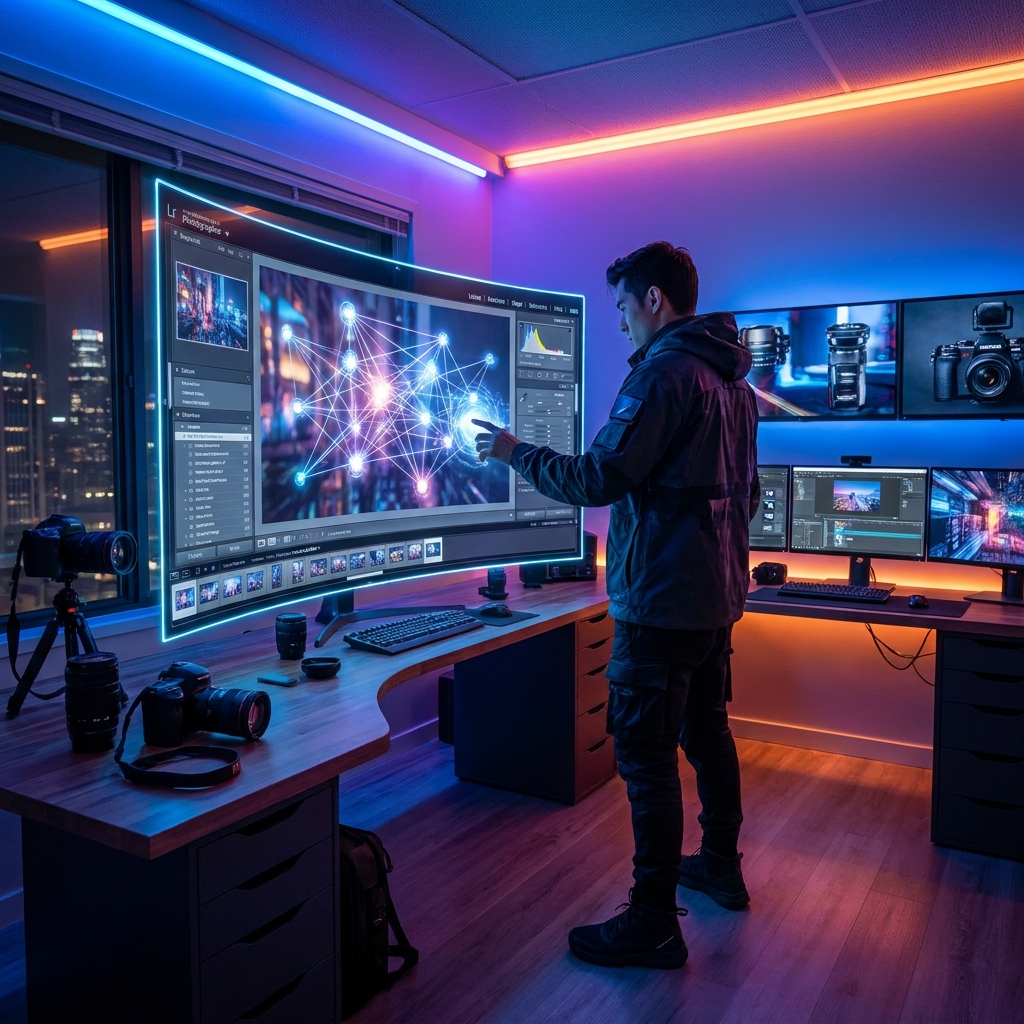
Photo editing has evolved at a breathtaking pace. What once required hours of meticulous layer masking, manual dodge-and-burn, and delicate color grading can now be accomplished in seconds. As we navigate 2026, artificial intelligence is no longer merely a feature tacked onto legacy software; it is the core engine driving image processing, creative workflows, and digital artwork. Whether you are a seasoned commercial photographer, a social media creator, or an enthusiastic hobbyist, finding the best AI photo editor in 2026 is critical to maintaining a competitive edge and elevating your visual storytelling.
What Makes an AI Photo Editor Stand Out in 2026?
In previous years, AI photo tools were primarily recognized for simple background removal or basic noise reduction. Today, the landscape is defined by deep semantic understanding and context-aware generative tools. Modern editors do not just edit pixels—they comprehend 3D spatial depth, light sources, surface textures, and human anatomy.
Generative Precision and Contextual Awareness
The leading platforms in 2026 allow users to expand canvases, replace complex objects, and generate entirely new elements using simple text prompts or intuitive gestures. Crucially, these additions dynamically adapt to existing color profiles, grain structures, and depth of field, rendering modifications virtually indistinguishable from reality.
Neural Relighting and 3D Depth Mapping
One of the standalone innovations of 2026 is real-time 3D depth extraction. Advanced editors automatically convert flat 2D images into interactive spatial maps. This allows photographers to move light sources around a subject after the shoot has concluded, modify shadows naturally, and apply realistic bokeh based on true physical distance rather than simple blur masks.
Autonomous Batch Workflows
For high-volume professionals, efficiency is king. Today’s premier editors offer autonomous batch capabilities. You can train an AI model on your unique aesthetic style, allowing the software to automatically cull, crop, color-correct, and retouch thousands of event or wedding photos with incredible consistency.
Top Contenders for the Best AI Photo Editor of 2026
Selecting the ideal software depends heavily on your specific visual discipline. Here is a look at the software leading the industry this year.
1. Adobe Photoshop & Lightroom (2026 Edition)
Adobe continues to dominate the creative space by embedding its latest Firefly Generative Engine deep within Photoshop and Lightroom. In 2026, Firefly features unmatched contextual prompt adherence and seamless non-destructive editing layers. Photoshop remains the top pick for digital artists, retouchers, and commercial photographers who require absolute granular control combined with cutting-edge AI power.
2. Luminar Neo Pro 2026
Skylum’s Luminar Neo remains a fan favorite for landscape and portrait creators who desire speed without sacrificing quality. Its 2026 iteration boasts advanced sky replacement with automated water reflections, skin enhancement that preserves natural pores, and instant atmosphere creation (fog, mist, lens flare) powered by volumetric lighting algorithms.
3. Topaz Photo AI 2026
If your goal is maximum image restoration, upscaling, and noise reduction, Topaz Photo AI is unmatched. Built primarily around machine learning algorithms for sharpening and resolution enhancement, the 2026 release can salvage out-of-focus shots, scale low-resolution archives up to billboard sizes, and eliminate extreme ISO noise without introducing synthetic artifacts.
4. Canva Magic Studio Ultra
For content creators, marketers, and non-designers, Canva’s expanded Magic Studio offers an intuitive browser-based platform. In 2026, Canva combines powerful generative design with multi-platform output formatting, allowing users to transform a single photograph into social media banners, promotional flyers, and animated video assets instantly.
How to Choose the Right AI Photo Editor
With so many specialized tools on the market, choosing the best AI photo editor requires evaluating your specific workflow goals:
- Desktop vs. Cloud Processing: Powerful tools like Photoshop and Topaz often perform best on dedicated GPUs, whereas cloud-first platforms like Canva process heavy AI tasks on remote servers.
- Raw Processing Capabilities: Dedicated photographers should ensure their chosen editor supports native RAW formats and offers non-destructive sidecar file saving.
- Subscription Models: Determine whether a monthly subscription or a one-time perpetual license fits your budget.
Ethical Standards and Authenticity in 2026
As AI photo editors become more powerful, authenticity and transparency have taken center stage. The top software suites in 2026 support global Content Authenticity Initiative (CAI) standards. These tools automatically embed cryptographic metadata (C2PA specifications) into images, documenting exactly which edits were made by human hands and which elements were generated synthetically. Adopting editors that embrace these standards is essential for maintaining trust with audiences and clients alike.
